Motivation for the European Conquest of the New World Part 1


Motivation for the European Conquest of the New World

The European conquest of the New World stands as one of the most significant chapters in world history, a pivotal moment that forever altered the course of continents and civilizations. From the late 15th century onwards, European powers embarked on a series of ambitious voyages across the Atlantic Ocean, setting foot on lands previously unknown to them. This era of exploration, often referred to as the Age of Discovery, was driven by a complex interplay of motivations that encompassed religious fervor, economic ambitions, and a quest for glory and power.

At the heart of European motivations for venturing into the unknown was the intertwining of God, gold, and glory. These three pillars formed the foundation upon which explorers, monarchs, and adventurers built their dreams of conquest and colonization. Religious zeal, rooted in centuries of Christian tradition and the legacy of the Crusades, fueled the desire to spread the faith to distant lands and convert indigenous peoples. Gold, the coveted symbol of wealth and power,

exotic goods. Meanwhile, the thirst for glory and recognition drove individuals and nations to stake their claims on uncharted territories, seeking to leave an indelible mark on history.Religious motivations can be traced back to the medieval period, when Europe was engulfed in the fervor of the Crusades. These series of religious wars, spanning from the 11th to the 15th centuries, saw European Christians embarking on campaigns to reclaim holy lands in the Middle East, chief among them Jerusalem. The Crusades left a lasting imprint on the European psyche, instilling a sense of religious duty and a zeal for spreading Christianity to the far corners of the earth. This religious fervor found new expression in the Age of Exploration, as explorers and missionaries ventured forth with the conviction that they were carrying out God's will. They believed it was their divine duty to bring the light of Christianity to the indigenous peoples they encountered, often viewing themselves as instruments of divine providence

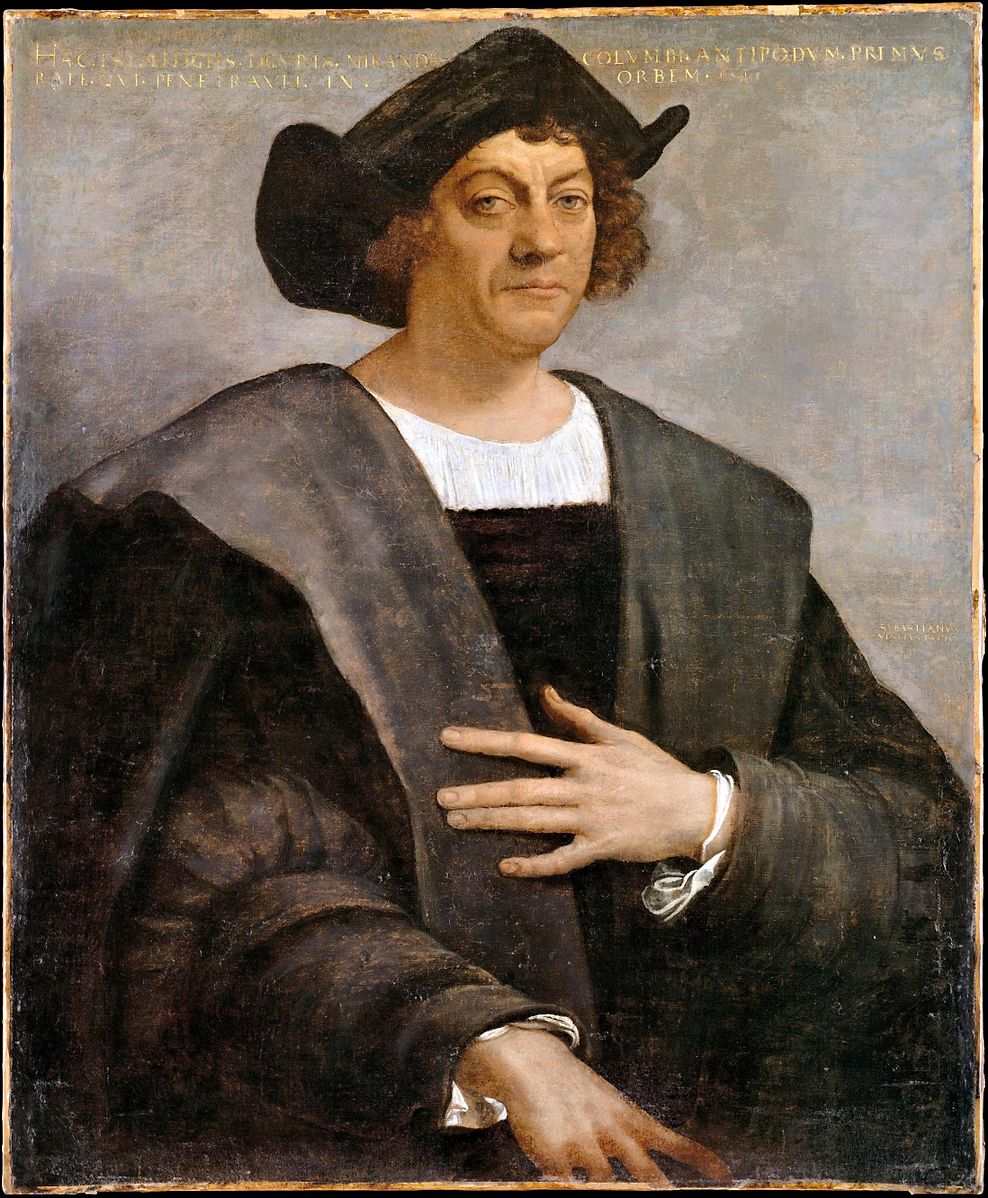
One of the most famous examples of this religious motivation was the voyage of Christopher Columbus. When he set sail in 1492, Columbus was not merely seeking a new trade route to Asia; he was driven by a fervent desire to spread Christianity to lands yet untouched by the Gospel. In his letters and writings, Columbus frequently spoke of his mission to convert the peoples of the New World, seeing himself as a vanguard of the Christian faith. This religious zeal was shared by many other explorers who followed in his wake, from Hernán Cortés in Mexico to Francisco Pizarro in Peru. The Spanish conquistadors, in particular, saw themselves as soldiers of Christ, waging a holy war against the perceived "heathens" of the New World

Alongside religious motivations, the pursuit of wealth played a central role in driving European exploration and conquest. The desire for gold and other precious metals was a powerful lure that drew explorers across vast oceans and into uncharted territories. Europe's thirst for wealth was not merely a matter of individual enrichment but also a means of funding wars, financing trade ventures, and asserting national power. The discovery of vast reserves of gold and silver in the Americas, most notably in regions such as Mexico and Peru, transformed the economic fortunes of European nations. These precious metals flowed back to Europe in unprecedented quantities, fueling a period of economic expansion known as the "Price Revolution.

The quest for gold was intertwined with efforts to find new trade routes to Asia, circumventing the costly and perilous overland routes that had been the traditional arteries of commerce. The famed spice trade, which brought exotic goods from the East to European markets, was a lucrative industry that promised immense profits. European powers, eager to tap into this wealth, sought alternative routes that would bypass the Ottoman Empire, which controlled the land routes to Asia. The search for a sea route to the riches of the East was a driving force behind the explorations of Vasco da Gama, who successfully sailed around the Cape of Good Hope to reach India in 1498.

In addition to religious fervor and economic interests, the pursuit of glory and power also motivated European explorers and conquerors. The Age of Exploration was an era of intense competition among European nations, each vying for dominance on the world stage. Discovering new lands, claiming territories, and establishing colonies were seen as ways of asserting national prestige and securing a place in history. Explorers such as John Cabot, who claimed Newfoundland for England in 1497, sought to win glory for themselves and their nations. The founding of colonies was not just an economic venture but also a means of extending political influence and projecting power across oceans.

The quest for glory also took on a personal dimension for many explorers and adventurers. Tales of legendary explorers such as Ferdinand Magellan, who led the first circumnavigation of the globe, captured the imaginations of people across Europe. These daring voyages into the unknown, fraught with danger and uncertainty, became symbols of individual courage and determination. The lure of being the first to discover new lands, to chart uncharted waters, and overcome seemingly insurmountable obstacles was a powerful motivator for those who dared to venture beyond the known world.

In conclusion, the European conquest of the New World was driven by a complex tapestry of motivations that encompassed religious fervor, economic ambitions, and a thirst for glory and power. The interplay of God, gold, and glory shaped the course of history, leading to the encounter of civilizations and the forging of new empires. The legacy of this era of exploration continues to reverberate in the cultural, economic, and political landscapes of the modern world, reminding us of the enduring impact of those who dared to sail into the unknown.


The Crusades: increased religious intolerance and forceful religious conversion


The year 622 brought a new challenge to Christianity. Near Mecca, Saudi Arabia, a prophet named Muhammad claimed he received a revelation that became a cornerstone of the Islamic faith. The Koran, which contained the revelations received by Muhammad, identified Jesus Christ not as God but as a prophet. Islam spread throughout the Middle East and into Europe until 732.
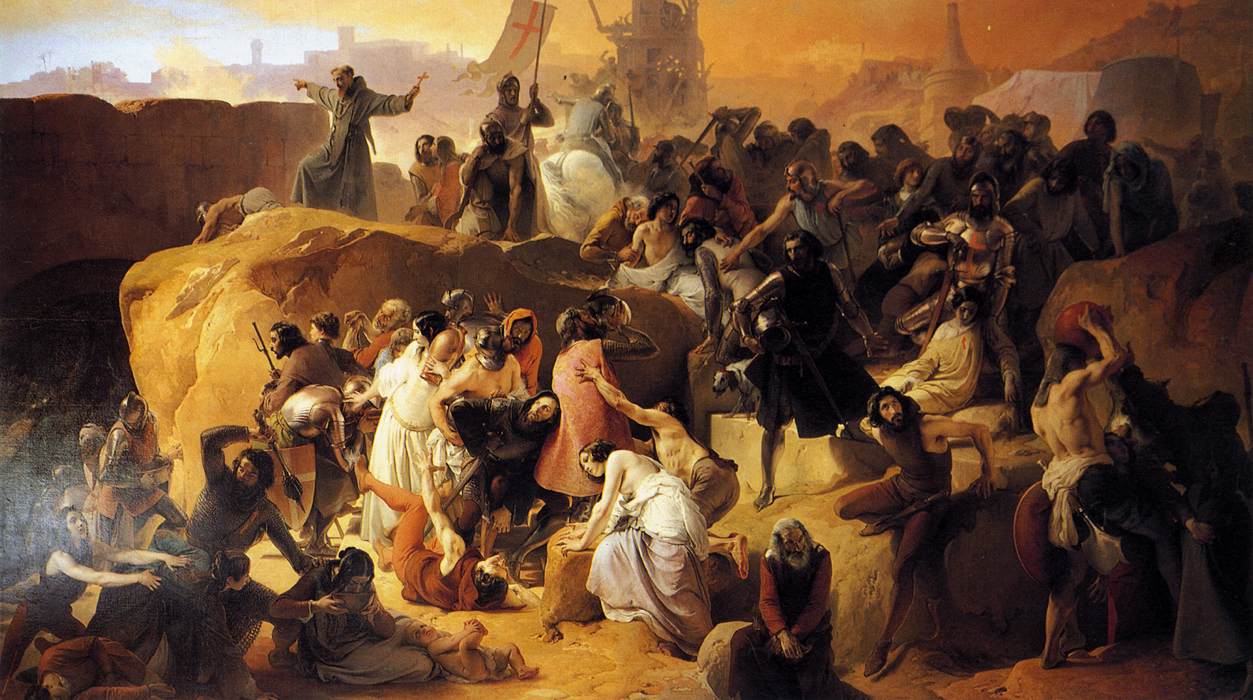
Soon thereafter, European Christians began the Crusades, a campaign of violence against Muslims to dominate the Holy Lands—an area that extended from modern-day Turkey in the north along the Mediterranean coast to the Sinai Peninsula—under Islamic control, partially in response to sustained Muslim control in Europe. The city of Jerusalem is a holy site for Jews, Christians, and Muslims; evidence exists that the three religions lived there in harmony for centuries. But in 1095, European Christians decided not only to reclaim the holy city from Muslim rulers but also to conquer the entire surrounding area.
The Crusades provided the religious ideology for the Reconquista, which in turn inspired Atlantic colonization. The Reconquista, or reconquest, refers to the 800 years of violence and expulsion of Muslims from the Iberian Peninsula after the failed Crusades. The Crusades and the Reconquista cemented religious intolerance, and the Christians looked to colonization partly as a means of continuing religious conquests. Particularly in the strongly Catholic nations of Spain and Portugal, religious zeal motivated the rulers to convert Native Americans and sanctify Christian global dominance.
Violence in Jerusalem during the Crusades. 

The lure of gold: finding new routes to trade Eastern goods
Despite the consequent religious polarization, the Crusades dramatically increased maritime trade between the East and West. As Crusaders experienced the feel of silk, the taste of spices, and the utility of porcelain, desire for these products created new markets for merchants.
Merchants’ ships brought Europeans valuable goods, traveling between the port cities of Western Europe and the East from the 10th century along routes collectively labeled the Silk Road. However, transporting goods along the Silk Road was costly, slow, and unprofitable. Muslim middlemen collected taxes as the goods changed hands. Robbers waited to ambush treasure-laden caravans.
As well as seeking a water passage to the wealthy cities of the East, sailors wanted to find a route to the exotic and wealthy Spice Islands in modern-day Indonesia, whose location was kept secret by Muslim rulers. The lure of profit pushed explorers to seek new trade routes to the Spice Islands and to eliminate Muslim middlemenA thirst for glory: European competition for global dominance
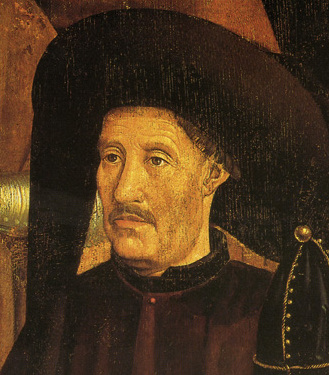
Competition between the Portuguese and the Spanish motivated both nations to colonize quickly and aggressively. Prince Henry the Navigator spearheaded Portugal’s exploration of Africa and the Atlantic in the 1400s. 
Portuguese sailors successfully navigated an eastward route to West Africa, where they established a trading foothold. Portugal then spread its empire down the western coast of Africa to the Congo, along the western coast of India, and eventually to Brazil and the Atlantic islands. Although the Portuguese did not rule over an immense landmass, their strategic holdings of islands and coastal ports gave them almost unrivaled control of nautical trade routes.
Henry the Navigator. 
The travels of Portuguese traders to western Africa also acquainted the Portuguese with the African slave trade, already widely in practice in West Africa and funded by sugar production on the newly colonized Atlantic islands. Upon discovering the immense global market for sugar, the Portuguese began to trade enslaved people across the Atlantic to toil on the sugar plantations. The Portuguese fort Elmina Castle, located in modern-day Ghana, became more of a holding pen for enslaved Africans from the interior of the continent than a trading post, as the markets for slave labor in both Europe and then the New World boomed.
Portuguese colonization in the 1400s inaugurated an era of aggressive European expansion across the Atlantic. The Spanish, threatened by the Portuguese monopoly on enslaved Africans and expansion in the Atlantic, started their own colonization project with Christopher Columbus in 1492. The competition between the two nations continued and drew more and more Europeans to the New World.
Christopher Columbus

What do you think?


Motivation for European conquest of the New World

During the Age of Discovery, religious intolerance contributed to global unrest primarily through the efforts of Christian colonists in the New World. European powers, particularly Spain and Portugal, sent missionaries alongside explorers and settlers to the Americas. These colonists had a strong desire to convert Native Americans to Christianity, often by force if necessary. This led to conflicts, oppression, and exploitation of indigenous peoples, as well as the destruction of their cultures and traditions in the name of religious conversion. These actions fueled tensions and resistance, contributing to global unrest during this period
Despite having a basis in religious and ethnic intolerance, in what way did the Crusades increase cultural interaction between Europe and the Middle East?
Choose 1 answer:

(Choice B) European Crusaders developed a taste for trade goods from India, China, and Central Asia, which spurred trade with the East along the Silk Road.

The Crusades, despite their basis in religious and ethnic intolerance, led to increased cultural interaction between Europe and the Middle East primarily through trade. European Crusaders returning from the Holy Land brought back with them a taste for the luxury goods of the East, such as spices, silk, and precious metals. This sparked a desire for direct access to these goods, which in turn stimulated trade with the East along the Silk Road. European merchants sought out new trade routes and established trading posts, leading to a significant exchange of goods, ideas, and technologies between Europe and the Middle East.


During the period known as the Reconquista, Spanish forces
Choose 1 answer:

(Choice A) Expelled North African and Arab Muslims—known as Moors— from the Iberian Peninsula of Europe


During the period known as the Reconquista, Spanish forces aimed to expel the North African and Arab Muslims, known as the Moors, from the Iberian Peninsula of Europe. This centuries-long campaign took place between the 8th and 15th centuries, culminating in the capture of Granada in 1492, the last stronghold of the Muslim rulers in Spain. The Reconquista led to the establishment of Christian kingdoms in the region and marked the end of Muslim rule in Spain.


Comments

Popular posts from this blog

Coming Out: Queer Erasure and Censorship from the Middle Ages to Modernity

First China