The Columbian Exchange continues
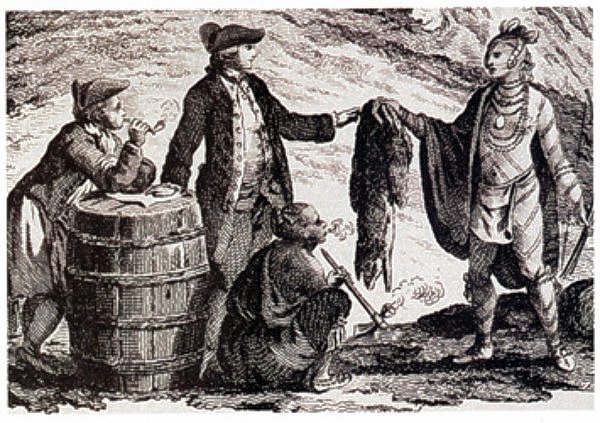
The European presence in America spurred countless changes in the environment, negatively affecting native animals as well as people. The popularity of beaver-trimmed hats in Europe, coupled with Native Americans’ desire for European weapons, led to the overhunting of beavers in the Northeast. Soon, beavers were extinct in New England, New York, and other areas. With their loss came the loss of beaver ponds, which had served as habitats for fish as well as water sources for deer, moose, and other animals. Furthermore, Europeans introduced pigs, which they allowed to forage in forests and other wildlands. Pigs consumed the foods on which deer and other indigenous species depended, resulting in scarcity of the game native peoples had traditionally hunted.
European ideas about owning land as private property clashed with indigenous people's understanding of land use. Native Americans did not believe in private ownership of land; instead, they viewed land as a resource to be held in common for the benefit of the group. Colonizers erected fields, fences, and other means of demarcating private property. Indigenous people who moved seasonally to take advantage of natural resources now found areas off-limits, claimed by colonizers.
Introduction of disease
Perhaps the single greatest impact of European colonization on the North American environment was the introduction of disease. Microbes to which native inhabitants had no immunity caused sickness and death everywhere Europeans settled. Along the New England coast between 1616 and 1618, epidemics claimed the lives of 75 percent of the indigenous people. In the 1630s, half of the Huron and Iroquois people living near the Great Lakes died of smallpox. The very young and the very old were the most vulnerable and had the highest mortality rates. The loss of the older generation meant the loss of knowledge and tradition, while the deaths of children only compounded the trauma.
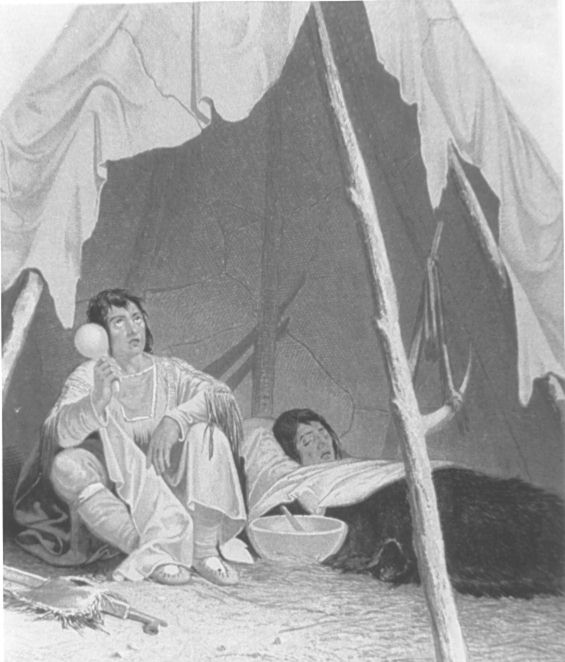
Some indigenous people perceived disease as a weapon used by hostile spiritual forces, and they went to war to exorcise the disease from their midst. These “mourning wars” in eastern North America were designed to gain captives who would either be adopted or ritually tortured and executed to assuage the anger and grief caused by loss.
New plants make new medicines
European expansion in the Americas led to an unprecedented movement of plants across the Atlantic. A prime example is tobacco, which became a valuable export as the habit of smoking took hold in Europe. Another example is sugar. Columbus brought sugarcane to the Caribbean on his second voyage from Spain in 1493, and thereafter a wide variety of other herbs, flowers, seeds, and roots.
Notably, Europeans traveled to America to discover new medicines. The task of cataloging the new plants found there led to the emergence of the science of botany. Early botanists included the English naturalist Sir Hans Sloane, who traveled to Jamaica in 1687 and there recorded hundreds of new plants.
Native Americans, who possessed a vast understanding of local New World plants and their properties, would have been a rich source of information for those European botanists seeking to find and catalog potentially useful plants. Enslaved Africans, who used medicinal plants in their native land, adapted to their new surroundings by learning the use of New World plants through experimentation and from the indigenous inhabitants. Native Americans and Africans employed their knowledge effectively within their own communities.
Did the markets in Europe influence the development of botany and agriculture in the New World? How so?
The markets in Europe significantly influenced the development of botany and agriculture in the New World during the Age of Exploration and colonial periods, a phenomenon known as the Columbian Exchange. This exchange of flora had profound effects on both continents.
Europe benefitted from a wealth of previously unknown plants from the Americas. Crops like maize, potatoes, tomatoes, peppers, squash, and beans became valuable commodities, transforming European agriculture and diets. Potatoes and maize, for instance, became staple crops across Europe, offering new sources of nutrition and resilience against famine.
Conversely, European settlers introduced familiar plants to the Americas, such as wheat, barley, oats, sugarcane, coffee, citrus fruits, and various herbs and spices. This introduction diversified agricultural practices in the New World, creating new economic opportunities.
Economically, the demand for crops like sugar, tobacco, and cotton in Europe spurred the establishment of large-scale plantation economies in the New World, often reliant on forced labor from enslaved peoples. This shift from subsistence farming to cash crops had significant social, economic, and environmental impacts.
Trade flourished between Europe and the New World, driven by the exchange of botanical specimens, seeds, and agricultural knowledge. Botanical gardens emerged as living laboratories for studying and cultivating new plants, while scientific exploration of the Americas by botanists and naturalists like Carl Linnaeus contributed to the field of botany.
In essence, the markets in Europe played a pivotal role in the botanical and agricultural transformation of the New World. The Columbian Exchange brought new plants, agricultural practices, and economic systems to both continents, shaping ecosystems, economies, and societies. This historical exchange continues to influence the agricultural landscape and botanical diversity of the Americas and Europe today, leaving a lasting legacy of intercontinental exchange and development.
How did indigenous people and colonists exchange both knowledge and materials to make new medicines?
Indigenous peoples possessed a deep understanding of the medicinal properties of local plants, herbs, and natural substances. They shared this knowledge with European colonists, introducing them to remedies for various ailments. For example, indigenous healing traditions like Ayurveda in South America or the use of medicinal plants in North American tribes provided a wealth of botanical knowledge.
This included plants like cinchona, used to treat malaria, or the bark of the willow tree, which contained salicin, a precursor to aspirin. Colonists, in turn, brought new plants and medical techniques from Europe, such as the cultivation of medicinal herbs and the distillation of herbal extracts.
The exchange of knowledge also extended to the blending of traditional remedies with European medical practices. This fusion resulted in the development of new medicines that combined the best of both worlds. For instance, European physicians learned from indigenous healers about the use of quinine from cinchona bark for treating fevers, which became a crucial treatment for malaria.
Similarly, indigenous peoples incorporated European metal tools for surgery or new techniques for wound care into their traditional practices. This exchange of knowledge and materials not only expanded the pharmacopoeias of both groups but also laid the foundation for the development of new medical treatments that continue to influence modern medicine.
How did the environment of the Americas suffer from European contact? How did it benefit?
The environment of the Americas faced significant challenges as a result of European contact, particularly during the Age of Exploration and subsequent colonial periods. One of the most notable impacts was widespread deforestation, as European settlers cleared vast areas of land for agriculture, logging, and urban development.
This deforestation led to habitat loss, biodiversity decline, soil erosion, and disruption of local ecosystems. Many native species suffered due to the destruction of their natural habitats, while invasive species introduced by Europeans further disrupted the balance of local ecosystems. Additionally, the extraction of resources, such as mining for precious metals like gold and silver, often involved environmentally destructive practices, leading to water pollution, soil degradation, and disruption of natural landscapes.
However, European contact also brought about certain environmental benefits to the Americas. The introduction of new crops, such as wheat, barley, sugarcane, and citrus fruits, allowed for the diversification of agricultural practices. These crops thrived in various climates across the Americas, contributing to the development of new food sources and economies. Furthermore, European technology, such as iron tools and transportation infrastructure, improved efficiency in agriculture and resource extraction.
This technological advancement facilitated the growth of new settlements, industries, and trade networks, contributing to economic development. Additionally, the exchange of plants and animals between Europe and the Americas, known as the Columbian Exchange, led to the enrichment of biodiversity and the emergence of new ecosystems in both continents. While the environmental impacts of European contact were often detrimental, these developments also brought about some beneficial changes that shaped the environmental landscape of the Americas.
How did the environment of the Americas suffer from European contact? How did it benefit?





Comments
Post a Comment